
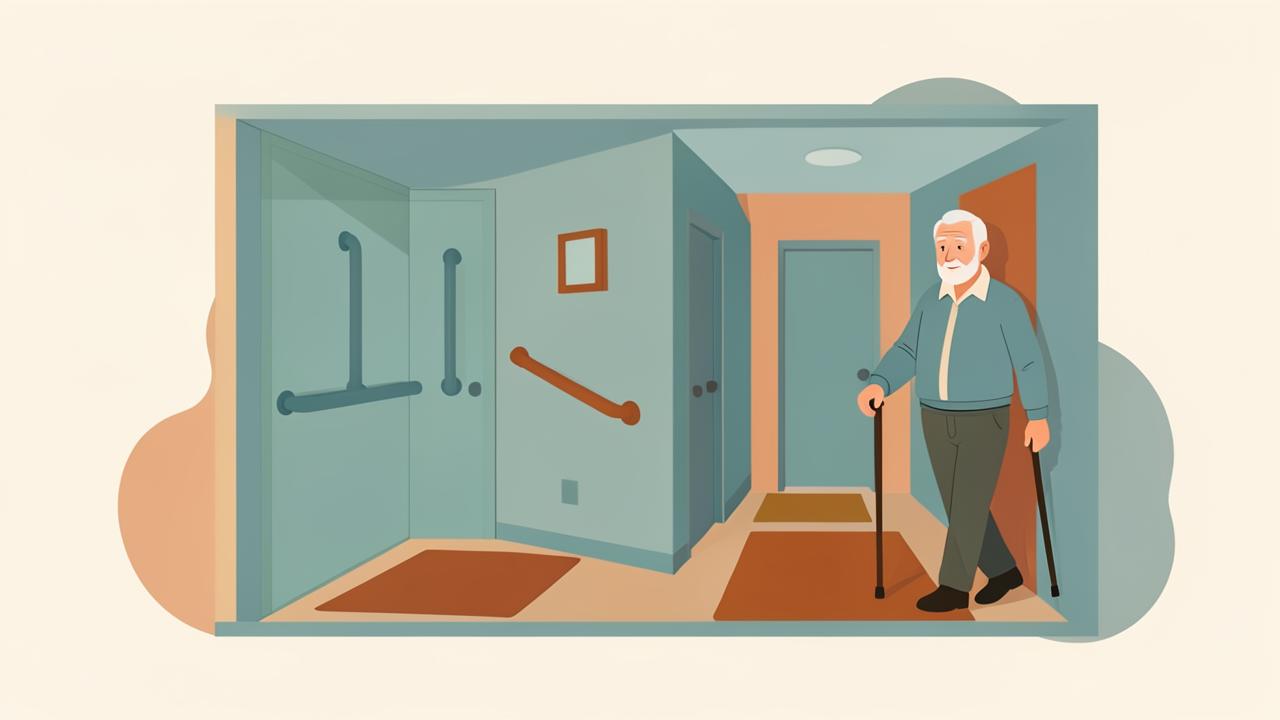
Falls are the leading cause of injury-related hospital visits for older adults, and the home is where most of them happen. Walk each room the way the person actually moves through it - at night, in socks, half awake - and fix what you find.
Entryway and hallways
Remove throw rugs or secure them with double-sided tape. Clear cords and shoes from walking paths. Add motion-activated night lighting so no one crosses a dark hallway to reach a switch.
Bathroom
This is the highest-risk room in the house. Install grab bars anchored into studs beside the toilet and inside the tub - towel bars are not grab bars. Add a non-slip mat, a shower chair, and a handheld shower head. A raised toilet seat reduces the hardest transfer of the day.
Bedroom
Keep a lamp, phone, and water within reach of the bed. Check bed height: feet should rest flat on the floor when sitting on the edge. Replace loose slippers with closed-back, non-slip shoes worn indoors.
Kitchen and stairs
Move everyday items to waist height so no one uses a step stool. Ensure both sides of every stairway have secure handrails, mark the top and bottom step with contrasting tape, and repair loose treads.
The non-environmental risks
Home modifications only address half the problem. Ask the prescriber to review medications that cause dizziness or drowsiness, schedule an annual vision check, and keep strength and balance work in the weekly routine.
- Annual medication and vision review
- Balance-focused activity two to three times a week
- Vitamin D and hydration discussed with the clinician
- A plan for what happens if a fall does occur
Key takeaways
- Bathrooms and stairs deserve attention first.
- Medication side effects contribute to a large share of falls.
- Strength and balance work is prevention, not rehabilitation.
This article is general information and is not a substitute for individualized medical advice. Please speak with a licensed clinician about your specific situation.